This site documents historical Chinese folk customs for cultural interest only. It is not advice of any kind.

Dried Mugwort Foot Soak · A Quiet Evening Folk Habit from Chinese Home Kitchens

A soft, cultural story about dried mugwort in a basin — written for overseas readers who like slow routines and plain kitchen language. This is traditional folk narration only, not guidance for any personal situation.

Across southern and eastern China, dried mugwort often sits in kitchen cupboards beside rice and dried beans — not as a centerpiece, but as a humble bundle tied with string. Around the Dragon Boat Festival you still see fresh bundles hung beside doors, a fragrant summer habit that belongs more to street memory than to any single household script. Inside ordinary flats, elders sometimes tear off a little of the dried leaves for a basin of warm water at night: a slow foot soak after a long day on tile floors, at wet markets, or behind a shop counter. The picture is intentionally low-key: steam above the ankles, a towel draped over a plastic stool, and the quiet sound of water when someone shifts their heels.

This article exists only to pass along that household story for readers abroad who enjoy soft cultural detail and gentle evening routines. It follows the rule of this whole site: we describe traditional folk usage in everyday language, note how heat and scent usually feel, and remind you that personal comfort changes from person to person. Nothing here is a promise about how you will feel tomorrow.

Why neighbors talk about it as a ritual, not a headline

In folk telling, the soak is often framed as a way to bookmark the end of work: warmer water than a quick shower, slower time than scrolling on the sofa. People compare notes about basin depth, whether a partner prefers a second pour of hot water mid-session, and whether to keep the window cracked when the room feels small. Those details matter because the habit lives in sensory pacing — scent, warmth, and stillness — rather than in rigid rules copied from strangers on the internet.

When the habit shows up in daily life

Kitchen-table chatter often links the soak to cool-season coziness or tired feet after market errands, teaching shifts, or long hours on cold tile. Think of it as a sensory ritual: aroma in the room, warm breathing, and the simple fact of warm water around the feet. Some families pair it with quiet tea afterward; some nights they skip the plant entirely and only use salt in warm water. The pattern stays flexible — the point on this site is always mild relaxation and familiar atmosphere, not a checklist tied to a named outcome.

How the habit usually travels between generations

In many homes the basin habit never arrives as a printed list. A child watches a grandparent test water with the wrist, tear a little bundle, and hum while the room fills with steam; years later the same child, now grown, copies the wrist test without thinking. That slow transmission is why this article favors plain verbs — pour, swirl, dry, sit — instead of dramatic claims. It is also why we repeat boring safety lines: folk beauty sits next to boring safety in real kitchens. If you are learning from a video online, cross-check water heat with your own hand every single time, because clips are edited and basins differ. Finally, remember that neighborhoods differ: humidity, floor materials, and indoor airflow all change how warm a soak feels, so your first try should stay short, gentle, and easy to stop.

Materials

A small bundle of dried mugwort leaves tied with natural hemp string
Dried mugwort bundle — often kept in kitchen cupboards alongside rice and beans.

Steps

  1. Gently rinse dust from the dried leaves; pat dry so loose stems do not scratch skin.
  2. Pour water that feels plainly warm on your wrist; swirl a small handful of mugwort until color and scent spread without feeling sharp in your nose.
  3. Lower both feet slowly; keep toes able to wiggle freely.
  4. Stay for a short first session — many home cooks suggest starting well under ten minutes if you are new, then adjusting next time.
  5. Dry the skin carefully, especially between toes, before you walk on cool floors.
  6. Rinse the basin; compost or discard plant material according to your local habits.

Notes for comfort and safety

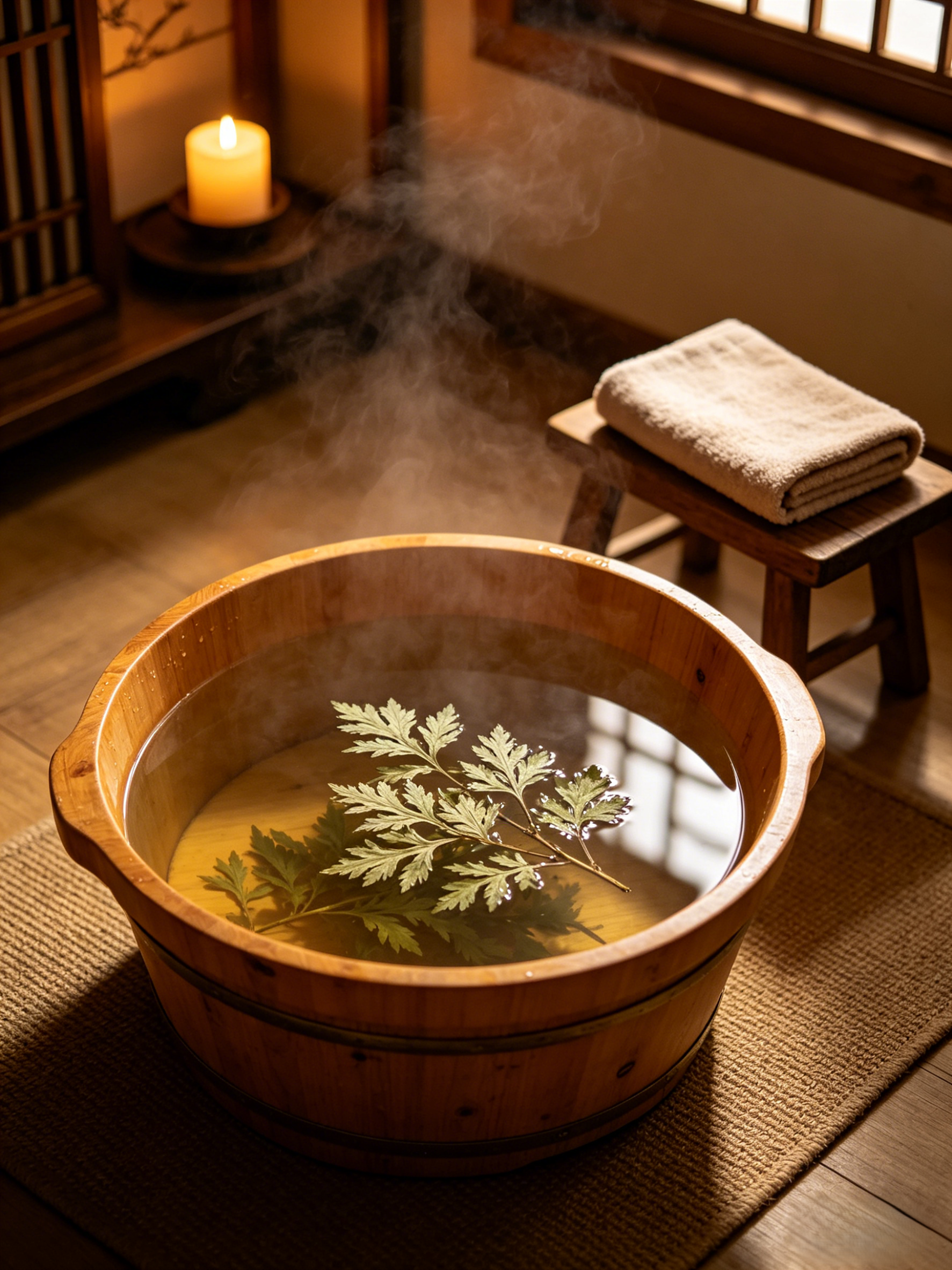
A wooden basin with warm water and a few mugwort leaves floating, steam rising gently
A quiet basin ritual — warm water, a few dried leaves, and a moment of stillness.

Very hot water can hurt skin before you notice, especially for older adults or anyone with reduced feeling in the feet, so generous cooling time belongs in the same sentence as "warm soak." Stop if the skin looks angry-red, if stinging appears, or if itching grows stronger than a mild tingle — those are personal stop signs, not a comment on traditions. If the leafy scent feels too heavy indoors, open a window or shorten the soak rather than pushing harder, because coziness is the only goal we name here. Also avoid swapping in wild plants you picked yourself; mistaken identity is a genuine hazard in any plant story, folk or otherwise.

Who should pause or seek guidance first

Household chatter in many regions adds extra restraint for pregnancy, nursing, and young children, partly because comfort thresholds differ and partly because daily routines change quickly in those chapters of life. If you are in one of those groups — or you already follow guidance from a qualified professional about baths, plants, or warm-water time — ask that same source before adding mugwort or lengthening soaks, even when the practice sounds mild. Anyone with broken skin on the feet, known plant sensitivity, or recent foot injury should skip this kind of soak until a qualified professional agrees it is appropriate.

The Huangdi Neijing · Suwen · Shanggu Tianzhen Lun says: "Keep regular daily life and do not overstrain." An evening foot soak with mugwort echoes that ancient idea of small, steady routines for peaceful rest. Quoted purely as cultural context, not medical instruction.

— From Huangdi Neijing · Suwen · Discussion on High Antiquity

Seasons and windows

Old neighbors sometimes joke that the best basin nights arrive when the kitchen is already warm from cooking — winter steam mixing with foot steam, summer sessions kept shorter when humidity climbs. None of that is a rule for you; it is only color commentary from kitchens where habits pass by watching grandparents fill the kettle. If you try the soak once and decide plain warm water suits you better, that choice still sits inside the spirit of slow domestic self-care this site likes to document.

If you live outside China

Look for clear labeling in shops you trust, read ingredient language you understand, and keep expectations soft: this is a cozy folk pattern people grew up beside, not a rigid export item. Some nights you might prefer plain salt water or only a hot towel — that flexibility belongs to the tradition too.