This site documents historical Chinese folk customs for cultural interest only. It is not advice of any kind.

Ginger & Date Warm Sip · A Quiet Kitchen Habit from Chinese Homes

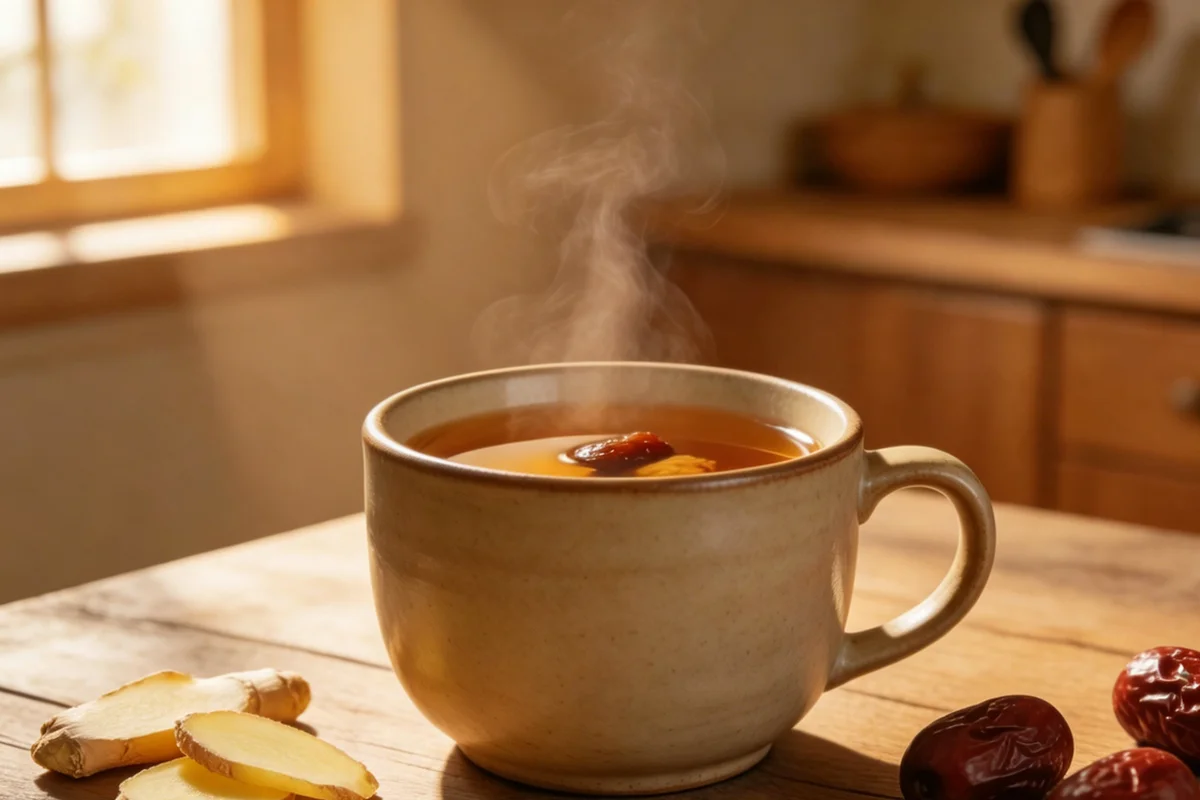
Sliced ginger and red dates in a ceramic cup — one of the most ordinary after-meal moments in Chinese family life. This is folk narration only, not guidance for any personal situation.

If you walk into almost any Chinese kitchen after dinner, you will likely find a small pot on the stove or a thermos on the counter holding pale-gold liquid with a faintly sweet, peppery smell. That is ginger-date water — not a ceremony, not a prescription, just something a parent or grandparent put together the way they always have, the way their own parents did before them.

The ingredients are simple: a few slices of fresh ginger and a handful of dried red dates (jujube), sometimes with a bit of rock sugar or goji berries if the cupboard happens to have them. Hot water goes over the top, and the cup sits for a few minutes while the family clears the table. Nobody measures anything precisely — a "thumb-width" of ginger, a "small fistful" of dates — because the habit lives in feeling, not in recipes.

Where the habit comes from

Ginger has been part of Chinese kitchen life for well over two thousand years. Ancient texts mention it as a common household ingredient, used in cooking, in pickling, and occasionally steeped in hot water. The practice of pairing it with red dates likely grew from simple convenience: both ingredients were dried and shelf-stable, available year-round in markets and home pantries, and both contributed a mild, pleasant warmth to a cup of water on a cool evening.

Folk telling often frames the drink as a way to "warm the stomach" after a meal — language that belongs to kitchen-table conversation, not to clinical instruction. The phrase is descriptive, not prescriptive: it captures how the sip feels to the person holding the cup, not a claim about what it does inside the body.

How it usually looks in daily life

A simple ceramic cup of warm ginger tea on a bamboo coaster
A quiet cup on a bamboo coaster — the kind of scene you find in most Chinese kitchens after a meal.

The habit is deeply casual. Some families make a large thermos in the morning and sip from it all day; others only brew a single cup after dinner. In some regions, ginger-date water appears during the winter months and disappears in summer; in others, it is a year-round presence. The pattern stays flexible because it was never formalized — it simply traveled from one generation's hands to the next without being written down.

Children often grow up watching a grandparent peel ginger with a spoon, drop the pale slices into a pot, and hum while the water heats. Years later, the same person — now living in a different city, perhaps a different country — finds themselves doing the same thing without thinking. That quiet transmission is the real story here.

Materials

Steps

  1. Wash the ginger; slice it into thin rounds — no need to peel if the skin looks clean.
  2. Rinse the dried dates; if they are very hard, you can snip them open with scissors so the flavor releases faster.
  3. Place ginger slices and dates into a pot or cup.
  4. Pour hot water over the ingredients and let them steep for 5 to 10 minutes.
  5. Sip slowly. Add rock sugar or honey afterward if you prefer a sweeter cup.
  6. Refill with hot water once or twice — the flavor will be lighter each time, which many people actually prefer.

Notes for comfort and safety

Very hot liquids can burn the mouth and throat, so always test the temperature before taking a large sip — the same common-sense caution you would use with any hot drink. If the ginger flavor feels too sharp, use fewer slices next time or let the water cool a little longer. If you find the taste unpleasant, there is no obligation to finish the cup; the habit is about warmth and comfort, not about finishing what is in front of you.

Some people experience mild heartburn or stomach discomfort from ginger. If that happens to you, stop — folk habits are meant to feel pleasant, not to push through discomfort. Anyone with a known sensitivity to ginger, or who has been advised by a qualified professional to avoid it, should skip this drink entirely.

Who should pause or seek guidance first

Household conversation in many regions adds extra caution during pregnancy, nursing, and for young children — partly because tolerance varies from person to person, and partly because daily routines shift quickly during those chapters of life. If you are in one of those groups, or if you already follow guidance from a qualified professional about food choices, ask that same source before adding ginger-date water to your routine. Anyone taking blood-thinning medication or with gallstone concerns should also consult a qualified professional before consuming ginger regularly.

The Shennong Ben Cao Jing records ginger as a common ingredient in daily food preparation, noting its widespread use in household kitchens across different regions. Quoted purely as historical context, not as a recommendation for consumption.

— From Shennong Ben Cao Jing (Divine Farmer's Materia Medica)

Variations across regions

In southern China, you might find a pinch of brown sugar added to the cup, especially during cooler months. In some coastal areas, a single dried longan is dropped in alongside the dates. In the north, where winters are harsher, the ginger slices tend to be thicker and more generous. None of these variations is "correct" — they are simply reflections of what each kitchen had on hand and what each family grew up tasting.

If you live outside China and want to try the habit, look for fresh ginger and dried red dates at your local Asian grocery or online. Read ingredient labels if you buy pre-packaged dates, and keep expectations soft: this is a humble kitchen moment, not an imported wellness product. Some evenings you might prefer plain hot water or chamomile — that flexibility is part of the tradition too.