The Warm Towel Folded Over the Eyes
At the end of a long sewing afternoon, my aunt folded a warm towel into a narrow rectangle and laid it over her closed eyes. I sat across from her while the machine wheel slowed to a stop.
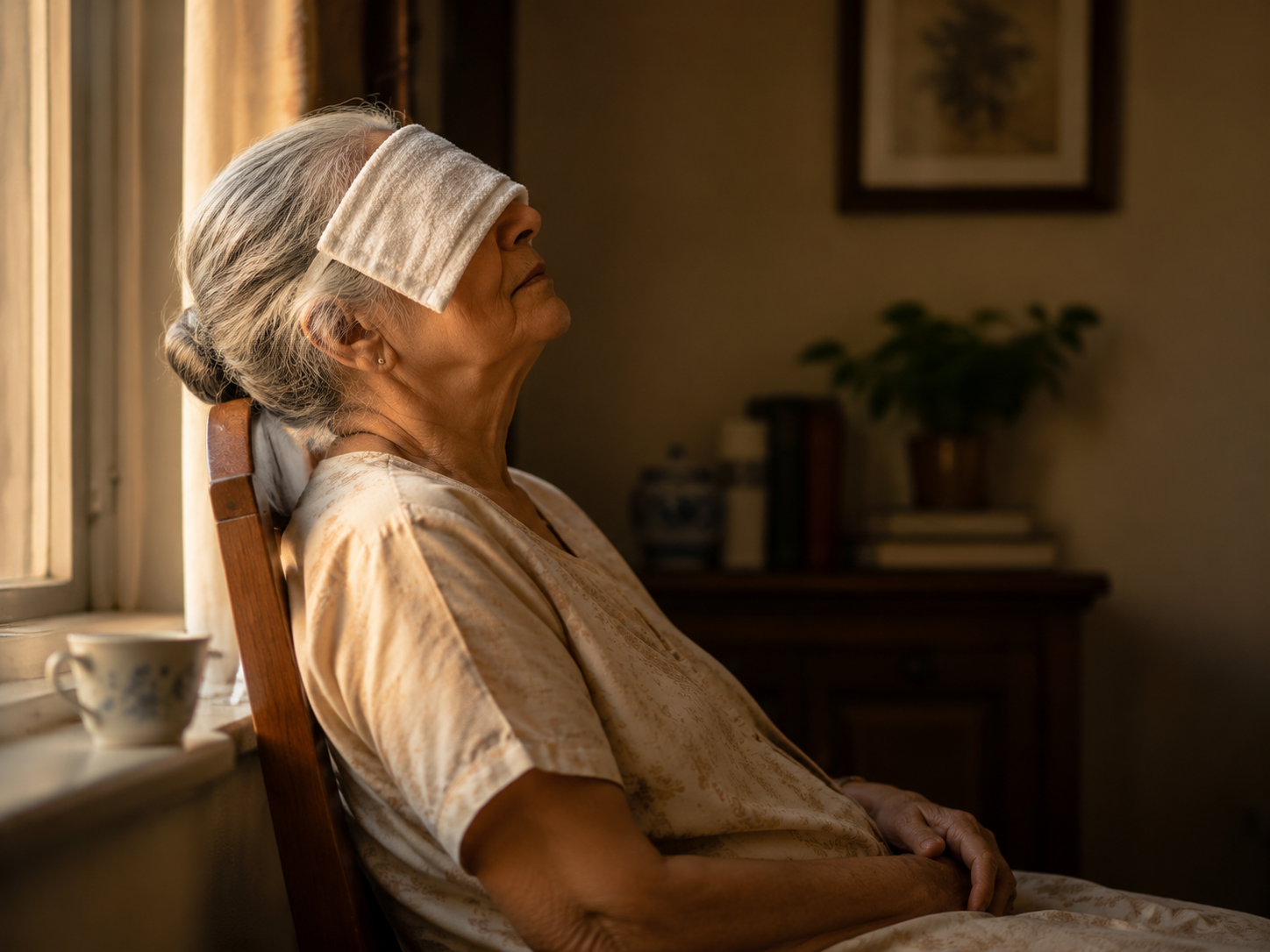
The towel after the machine stopped
My aunt unplugged the sewing machine, gathered the loose thread into her palm, and carried a clean cotton towel to the washroom. She wrung it carefully, returned to the chair, and folded it again so no corner hung across her cheek.
The room became quieter without the machine. I moved the pin cushion away from her elbow and set a dry towel on the table. She rested with both hands open on her apron.
Other objects in the evening room
Sour-jujube seeds waited in a paper packet near the kettle. A cassia pillow belonged to the bed, and the midday pause had taken place on the narrow bench by the window. The warm towel marked a different boundary: the workday had ended, but bedtime had not begun.
I notice that the same cloth could be prepared cool in summer and warm after close work. Its meaning came from the water, the fold, and the hand that passed it across the room.
Folded back into the stack
My aunt removed the towel, wiped the table edge where a drop had fallen, and spread the damp cloth over the washbasin rail. The dry towel stayed untouched.
When the sewing room opened the next morning, both towels were folded in the cupboard and the pin cushion was back beside the machine.