Soap Pods at the Wash Basin
The market vendor cracked a dried soap pod with a short wooden mallet and opened the dark shell toward me. I could see the sticky interior before I understood why these pods once hung beside wash basins.
The mallet behind the market scale
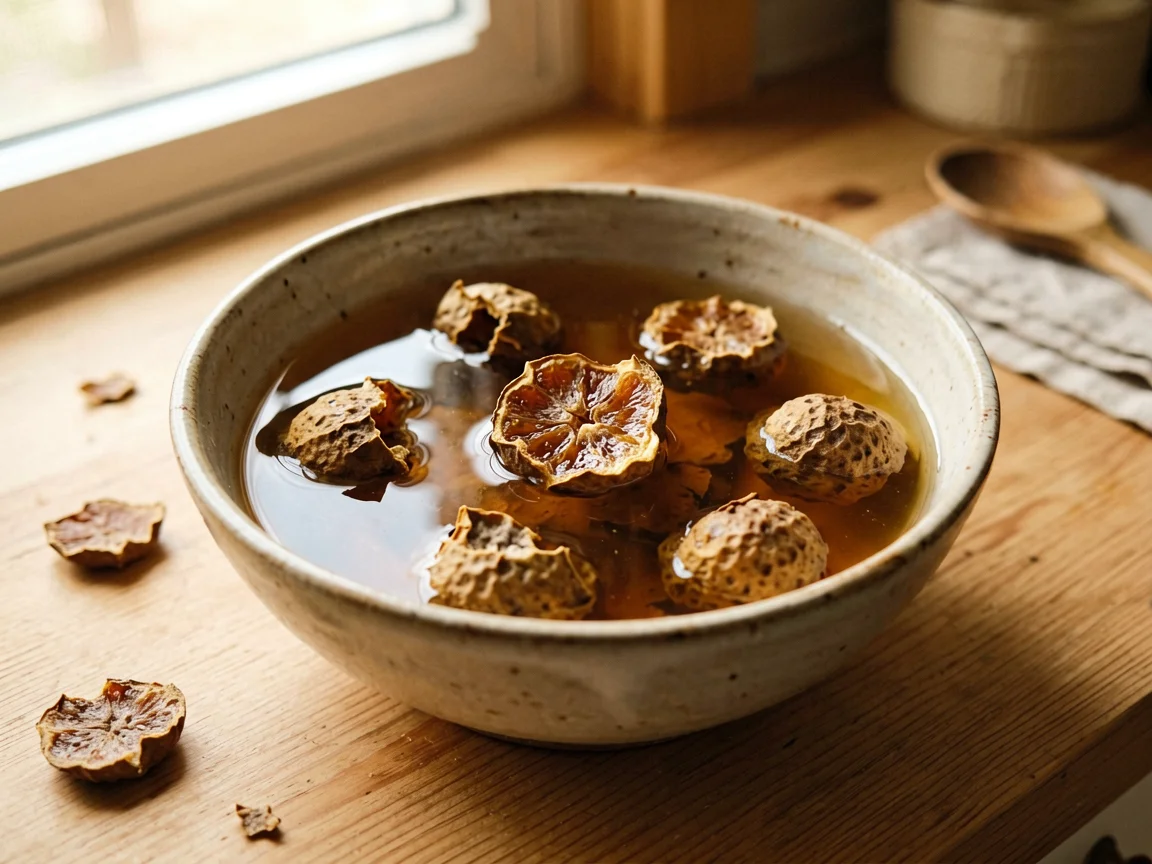
The pods looked like curved pieces of old wood. The vendor selected one without insect holes, set it on a block, and struck the seam rather than the center. The shell opened unevenly, exposing a darker surface inside.
She wrapped the pieces in thick paper because their points could catch a shopping bag. At home I place them in a bowl away from food and listen to the hard shells knock against the ceramic.
A wash shelf with several lives
The liquid made from the pods was strained before it reached cloth or hair. Rice water could enter another basin. Fresh ginger sat near the comb, and washed bedding later moved into the sun and air. Each task required its own container and its own cleanup.
I think of the vendor's mallet when I see a smooth bottle on a modern shelf. The older object carried its rough casing, seeds, paper wrapping, and strainer into the washing room with it.
Fragments caught in the cloth
The straining cloth holds the smallest shell fragments. I gather its corners before lifting it so nothing falls back into the bowl.
Once dry, the wooden mallet at the market returns beneath the scale. The next pod is opened on the same scarred block.