The Salt-Water Glass Beside the Toothbrush
At my aunt's washbasin, a small glass stood apart from the drinking cups. I knew it by the cloudy salt mark near the base and by the way she rinsed it before putting the toothbrushes back.
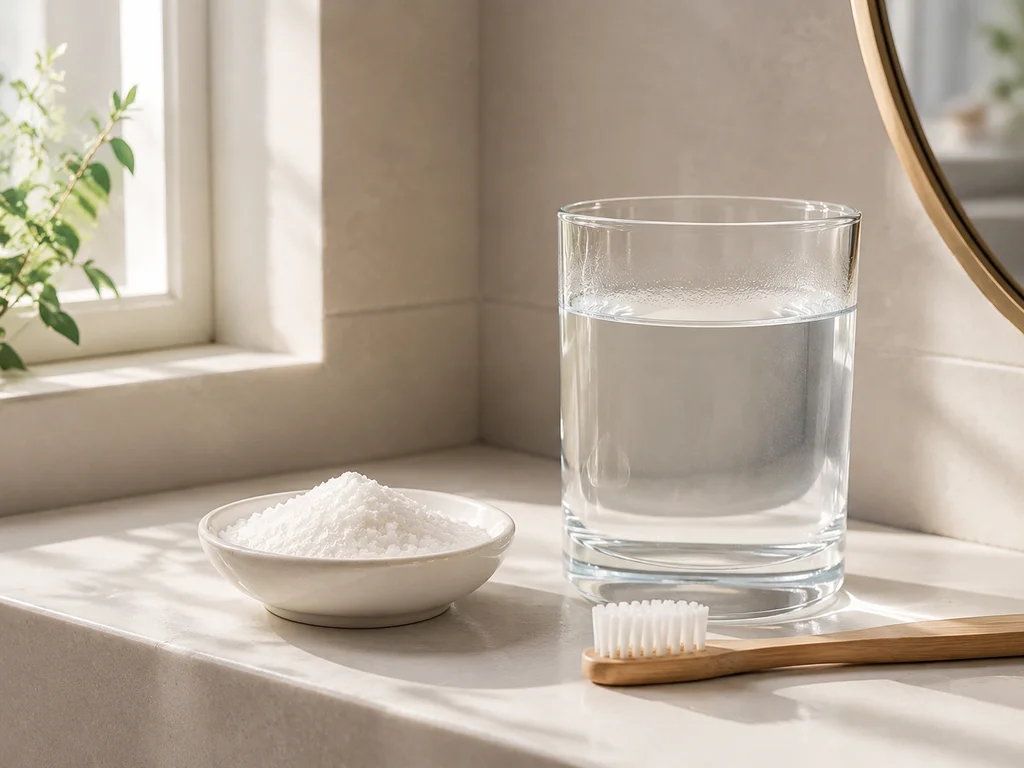
The glass that stayed by the sink
My aunt used a plain tumbler with a shallow chip on the rim. It never left the washroom. In the morning she poured warm water from a small flask, opened the salt jar with dry fingers, and returned the lid before touching the glass again.
I watched the routine while waiting for the mirror. She swirled the water, used the glass, rinsed it, and wiped the basin where grains had fallen. The whole action fitted between brushing teeth and combing hair.
A shelf shared with older washing habits
Plain warm water belonged to the kitchen at dawn. Soap pods and rice water occupied larger basins, while a warm towel was folded at night. The salt-water glass stayed small, fixed to one shelf and one part of the morning.
The object was easy to misread when empty. My aunt placed it upside down on its own square of cloth, separate from the cups used at meals.
The mark near the base
Even after rinsing, a cloudy line gathered where the glass met the shelf. She rubbed it with her thumb before guests used the washroom.
The toothbrushes returned to their holder, the salt jar went behind the mirror, and the little glass dried alone.