Salt Baked Orange at the Neighbor's Door
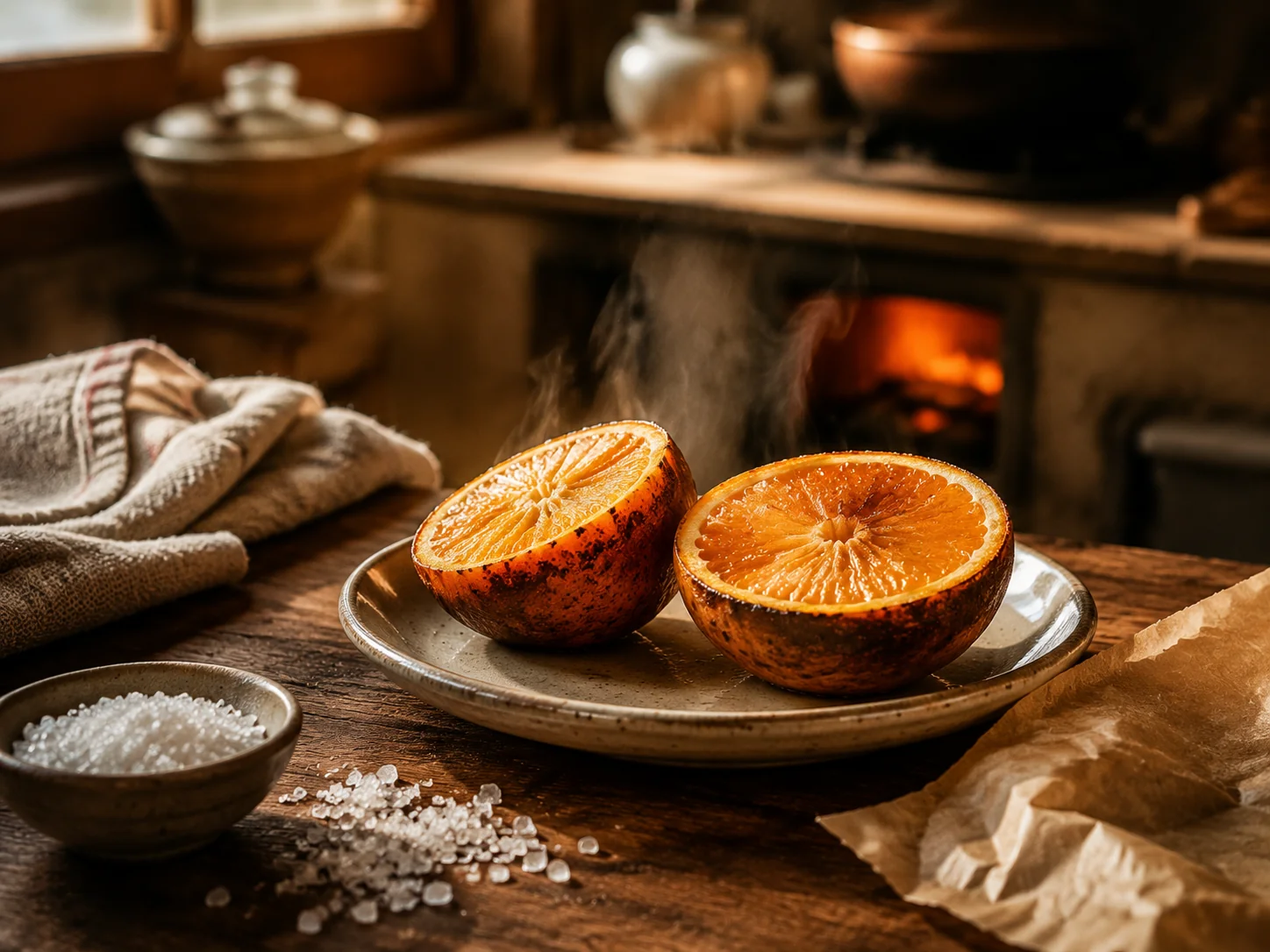
On a winter night when I could not stop coughing, the downstairs neighbor knocked with a plate of two blackened oranges still steaming. She had cut a slit in each, filled it with salt, and baked them in the stove.
A knock in the dark
On a winter night when I could not stop coughing, someone knocked. The downstairs neighbor stood at the door with a plate — two blackened oranges still giving off steam. There were salt grains on the skin. "Cut a slit in the top, fill it with salt, and bake it in the stove," she said. "Eat it while it's hot."
Snow pear water was a kitchen my grandmother stood at for an hour — the pear peeled, the rock sugar measured, the small pot set to a slow simmer. The baked orange was the opposite: someone else's kitchen, brought up the stairs. One was made at home; the other arrived at the door.
Salt and fire
The baked orange was too hot to hold. She tipped it onto a small plate and scored the peel with a knife. The fruit inside had stayed whole — the salt had melted into the segments, the charred skin came away in pieces. The taste was burnt-sweet with an edge of salt. "Eat it while it's hot," she said again. "Once it cools it doesn't do anything."
Scallion-white root drink was the other household answer to a wet coat coming through the door. Both used what the kitchen already held — no pharmacy, no prescription. An orange, a pinch of salt, and the fire already lit for dinner were enough to put together a response on a winter night.
The laundry cart in the corridor
I saw her in the corridor a few weeks later, pushing a cart of folded bed linen. She worked the night shift at a hotel laundry on the next block. The smell coming off her clothes was not baked orange — it was washing powder. I did not bring up that night. She did not either.
When she unlocked her door I caught a glance inside. Two pairs of slippers sat on the mat — one pair larger than the other, both worn flat at the heel. The cart went in first, then her, then the door closed behind her.