The Evening Walk After the Meal
The post-meal walk begins when bowls are cleared and chairs move back. It is usually slow, social, and close to home: a courtyard circuit, a lane to the corner, or a loop through an apartment compound.
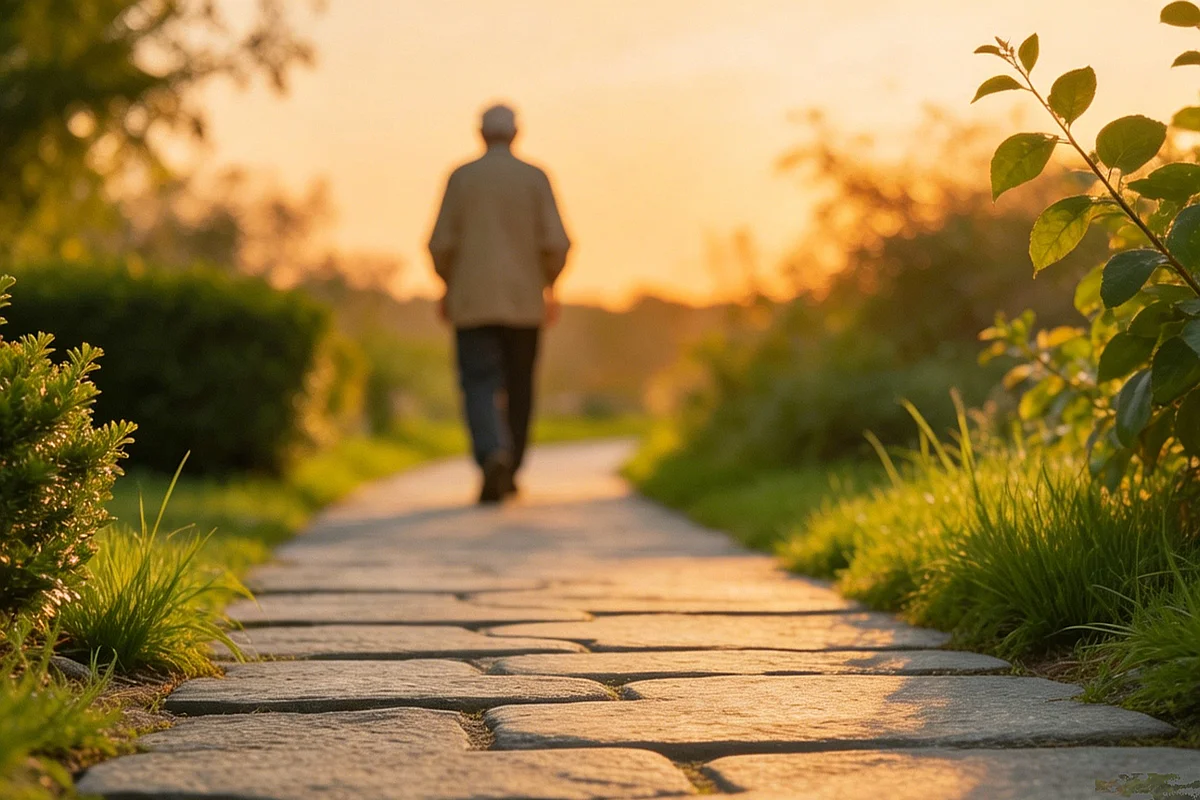
Walking in older daily-life texts
The Daoist daily-life text Ta Qing Dao Lin She Sheng Lun states: "After eating, one should walk slowly and attend to small tasks." The wording joins movement with ordinary work rather than distance, speed, or counted steps.
The familiar saying about walking a hundred paces and living to ninety-nine belongs to later household speech. Its rhyme helped it travel, but the number functions as a memorable phrase rather than a measured route.
The lane after dinner
In city neighborhoods, the walk often follows the same short path each evening. Retired couples pass the gate, parents push strollers, and shopkeepers stand outside while the dinner crowd circles back toward home. Conversation sets the pace.
The midday rest occupies the quiet after lunch. Ginger and red-date water may be poured after the walkers return, while plain warm water belongs to the next morning. These habits divide the day by action and hour.
No special object required
Weather changes the route. Summer walkers stay out longer near open courtyards; winter walkers keep closer to lit doorways. A lane, corridor, or covered arcade can serve the same household pattern.
The material record is slight: shoes beside the door, a key in the pocket, bowls drying in the kitchen, and chairs still pushed back from the table.