Bedding Across the Courtyard Rail
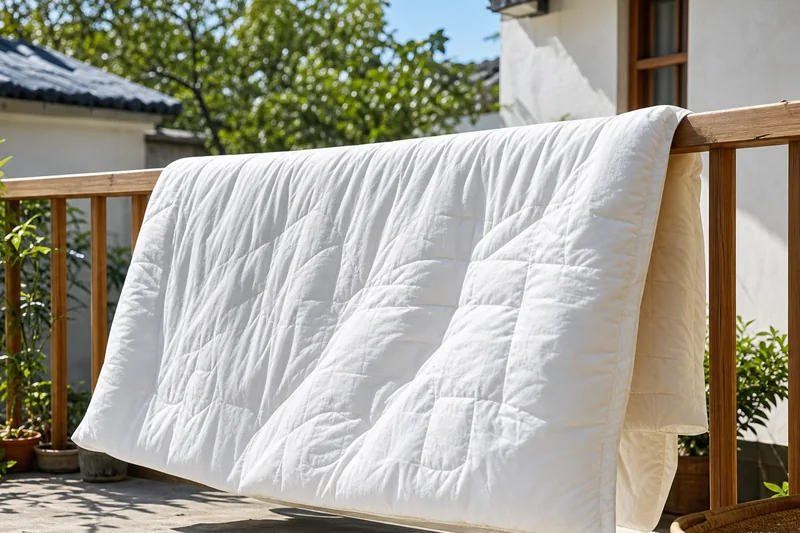
Bedding airing belongs to the clear-weather calendar of the household. Quilts move from beds to rails, cotton is turned and tapped, and the room remains open until the fabric is carried back inside.
An older calendar of airing cloth
The Eastern Han household calendar Four Monthly Ordinances gives the instruction directly: "On the seventh day of the seventh month, air books and clothing so insects do not damage them." The entry preserves a dated annual custom linking sun, stored cloth, paper, and household maintenance.
Tang poet Shen Quanqi later described an imperial airing tower crowded with boxes, patterned cloth, and attendants. Court display and courtyard laundry were not the same scene, yet both depended on carrying stored textiles into open air.
The courtyard version
In southern neighborhoods, the first dry morning after prolonged grey weather still changes balconies quickly. Cotton quilts cross rails, bamboo beaters tap compressed filling, and neighbors negotiate the shared clothesline without a written schedule.
Cassia-seed pillows are stood where air can pass around them. A bamboo wife is wiped and moved from the summer bed. The midday bench remains clear until the bedding returns, after the strongest light has left the courtyard.
Modern fabrics change the work
Cotton batting, silk filling, down, and synthetic quilts do not respond identically to direct sun. Contemporary care labels now determine whether bedding is placed in sunlight, shade, or only moving air.
The older household rhythm remains visible when a clear day opens several windows at once and the rail fills before breakfast dishes are dry.