The Bamboo Sleeping Mat Before Bed
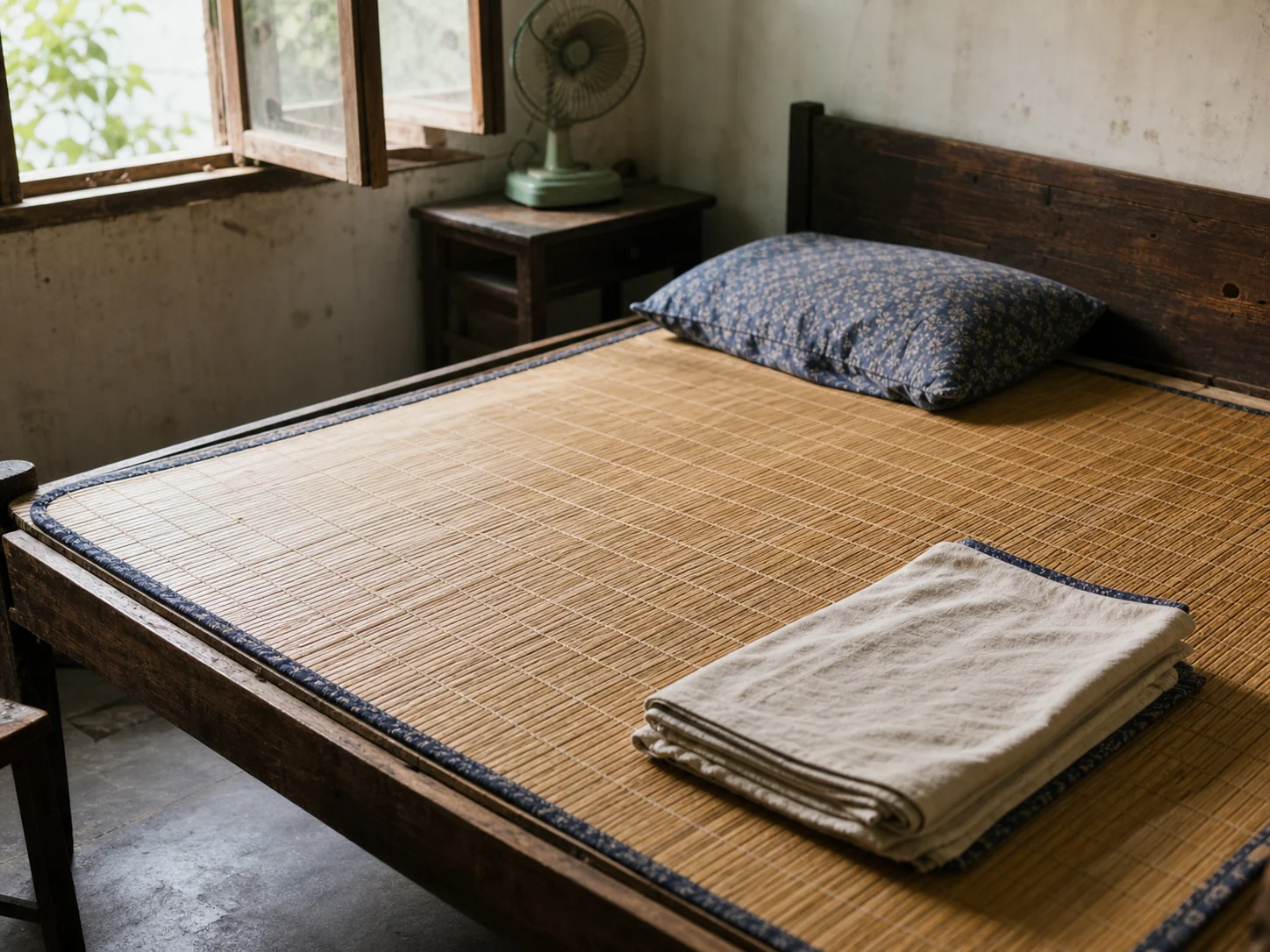
Before the hottest nights, my grandmother unrolled the woven bamboo sleeping mat, wiped it with a damp cloth, and left it open beside the window before bed.
Rolled behind the wardrobe
The mat spent winter rolled behind the wardrobe, wrapped in an old sheet. My grandmother could identify it by touch. She knew which end had the blue cotton binding and which corner had been repaired after a summer move.
When the weather turned close, she pulled it out before dinner and leaned it against the wall. The bamboo strips made a dry clicking sound as the roll opened. That sound meant the bed would be arranged differently that night.
A damp cloth and an open window
She wiped the mat with a wrung-out cloth, never soaking it. The cloth picked up dust from the woven surface and left a faint coolness that disappeared before the lamp was turned off. Then she opened the window and let the evening air cross the room.
The sheet stayed folded at the foot of the bed. A thin pillow went at the top, and the bamboo wife was placed across the middle when the room felt especially humid. Each object had its own position, like a small map of the season.
The bed after midnight
By midnight, the room was quiet except for the window and the slow fan on the table. The mat did not make the night cold. It made the bed feel separate from the heat held in the mattress and the wooden frame.
In the morning, my grandmother wiped the surface once more, rolled the mat loosely, and stood it upright in the corner. It could remain there for weeks or disappear the next day. Summer bedding was never a declaration. It was simply the household noticing what the room needed.